Can a Relationship Work When You Have Different Political Views?
You don't have to vote the same way to have a healthy relationship. But "We have different political views" can mean a lot of different things.
Maybe you disagree about taxes, government spending, or how a particular policy should work. Or maybe you disagree about something one of you considers deeply connected to your values, identity, safety, family, or how you want to raise your children.
Those are very different kinds of disagreements.
So if you and your partner have different political views, the more useful question may not be "Can couples with different politics make it work?" It's "What do our political differences actually mean for our relationship?"
Political Differences Aren't Automatically Relationship Problems
Political disagreement is common enough that some couples do make relationships work across political lines. Some research has shown that politically mixed marriages are a minority of U.S. marriages, and some survey data has also found somewhat lower average relationship satisfaction among politically mixed couples than among politically similar couples. That doesn't tell you whether any individual relationship will work, but it does show that political differences and relationship quality aren't exactly the same question.
You can disagree with your partner and still respect them. In fact, couples disagree about important things all the time. Religion. Money. Parenting. Careers. Sex. Where to live. How much contact to have with extended family.
The problem isn't automatically difference. The bigger issue is what happens when that difference enters the relationship.
Can you disagree without insulting each other? Can you be curious about why your partner thinks differently? Can you talk about an issue without spending the next three hours trying to convince the other person that they're wrong?
If you can, political differences may simply be one of several areas where the two of you don't see the world exactly the same way.
But Sometimes Politics Represents Something Much Bigger
Political beliefs don't exist in a vacuum.
They can overlap with beliefs about family, religion, gender, immigration, reproductive issues, guns, race, LGBTQ+ issues, and other subjects people may experience as deeply personal. That's why "Let's just agree to disagree" doesn't always work. You may be able to agree to disagree about a tax policy. It's much harder to do that when the disagreement affects a decision you have to make together or involves something one partner considers a core value. At that point, the issue isn't simply that one of you is a Democrat and the other is a Republican, or that one of you is conservative and the other is liberal.
The question becomes: Can both of our values coexist inside the life we're trying to build together?
Stop Trying to Decide Whose Beliefs Are "The Problem"
This is where couples can get stuck. One person says, "You've changed." The other says, "No, you've become extreme." Then the conversation becomes a debate about whose beliefs are more reasonable and who has a stronger character as a person.
That's usually not a very productive couples conversation. Instead, get specific about how the disagreement actually affects your relationship. Maybe your political differences rarely come up except during elections. That's very different from arguing about politics every night.
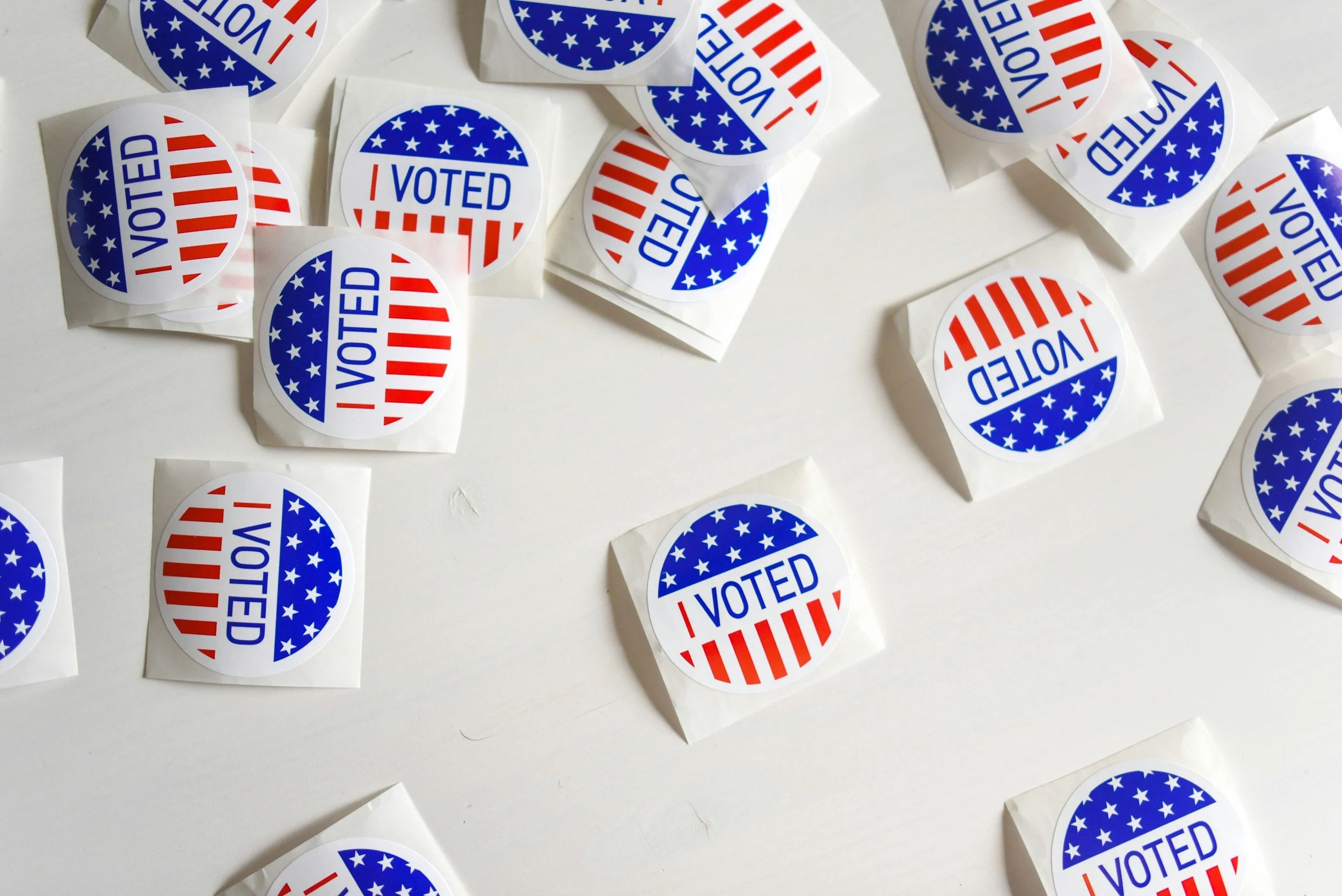
Maybe the issue is how one partner talks about certain groups of people. Maybe it's what media is playing constantly in your home. Maybe you're worried about how you'll explain an issue to your children. Those are actual relationship problems you can discuss.
"Your politics are wrong" or “you’re a terrible person for believing that” gives you almost nowhere to go.
"I don't want us arguing about politics in front of the kids every night" gives you something concrete to work on.
Ask Whether the Difference Affects Decisions You Have to Make Together
Some political differences can remain mostly theoretical. Others eventually show up in your actual life.
What happens if you disagree about what your children should be taught? What if you have different beliefs about reproductive decisions? What if one person wants to financially support political causes the other strongly opposes? What if extended family gatherings regularly turn into political arguments?
These aren't hypothetical philosophical debates anymore. They're decisions the two of you may have to make together. That's where couples need to get much more specific. You don't necessarily need identical beliefs. But you do need to know whether you can make shared decisions when those beliefs point you in different directions.
Pay Attention to Contempt
There's another difference that matters: disagreeing with your partner versus losing respect for your partner.
If political conversations regularly include eye-rolling, mocking, name-calling, or comments about how stupid someone would have to be to believe something, you're no longer just debating an issue. You're communicating contempt for the person sitting across from you.
That can become particularly damaging when you stop seeing your partner as a complicated human being and start seeing them primarily as a representative of a political group or movement you dislike. You probably aren't going to build much connection while mentally turning your spouse into the comment section of a political post.
Your partner is still your partner.
Some Differences May Be Dealbreakers
There isn't a universal list of political differences that couples should or shouldn't be able to tolerate. What feels like an interesting disagreement to one person may represent a core value to someone else. You get to decide what matters in your relationship.
The important part is being honest about it.
If a particular belief fundamentally changes how you see your partner, affects whether you feel respected, or creates a conflict about the life you want to build together, don't minimize that by telling yourself "We're just arguing about politics."
You may be dealing with a values conflict. And better communication doesn't automatically make every values conflict disappear, but it’s an important to do when deciding what next steps to take.
Different Political Views Don't Give You the Answer
Two people can vote differently and still build a relationship that works for them.vTwo people can also belong to the same political party and have serious disagreements about their values, family, money, religion, parenting, or future.
A political label alone doesn't tell you whether you're compatible.
What matters is what the disagreement represents, how it affects your shared life, and what happens between the two of you when you disagree.
A healthy relationship doesn't require agreeing about everything. But some disagreements reveal differences that can't simply be solved with better communication. Figuring out which kind of disagreement you're dealing with is the part that matters.
If political or values differences have become a recurring source of conflict in your relationship, couples therapy can give you a place to figure out what's actually underneath the arguments and whether you can navigate those differences together. Schedule a free consultation using the link below. I offer in-person couples therapy in Scottsdale and virtual couples therapy throughout Arizona, Colorado, Florida, and Nevada.