

Deep Brain Reorienting
Harnessing your brain’s innate power to heal itself.



What Is Deep Brain Reorienting (DBR)?
Deep Brain Reorienting (DBR) is a trauma-focused therapy developed by Scottish psychiatrist Dr. Frank Corrigan. It’s designed to help people work through deep-rooted emotional pain — especially trauma connected to early attachment experiences (like abandonment or caregiver distress).
Why DBR Was Created
Traditional talk therapies often focus on thoughts and story-based processing (“top-down” approaches), but DBR was developed based on what neuroscience now understands about how the brain actually responds during threatening or overwhelming experiences. Instead of starting with thoughts or memories, DBR works from the body and brain’s early instinctive responses to trauma.
What Happens in DBR Therapy
In a DBR session, the therapist helps you gently tune into subtle bodily sensations connected with a past upsetting experience. Instead of reliving the event in vivid emotional detail right away, the focus is on the body’s early, automatic responses. This helps the nervous system process the experience more completely and reduces the intensity of emotional reactions over time.
What Makes DBR Different from Other Therapies
Body-first approach: DBR starts with what the nervous system remembers, not with thoughts or narratives.
Trauma-rooted process: It targets the brainstem and midbrain — areas that react before we’re consciously aware — rather than focusing only on conscious interpretation.
Anchoring safety: By tuning into small physical sensations first, you stay grounded and present, reducing overwhelm.

Who Benefits From DBR
You might benefit from DBR if:
You've experienced trauma, whether a single event or ongoing experiences like childhood neglect or growing up in a dysfunctional family.
You have intrusive memories or flashbacks.
You get triggered by things that remind you of past experiences.
You're stuck with negative beliefs about yourself that seem rooted in the past.
Talk therapy helped you understand things intellectually, but you still feel stuck emotionally.
You're neurodivergent and have experienced trauma. Many of my clients are neurodivergent, and DBR can be adapted to work with different neurological profiles.

Getting Started
The first step is a free consultation. We'll talk about what's going on and whether DBR seems like a good fit. Book it through my online scheduling system.
For pricing and scheduling info, visit my FAQs & Rates page or contact me directly.
I offer DBR therapy in-person in Scottsdale, AZ and online in Arizona, Colorado, and Florida. Visit my locations page for details.
Location:
Scottdale, AZ
FAQs: Common Questions About DBR Therapy
-
Processing sessions typically run 50 to 90 minutes. The longer time allows space to work through material and ensure you feel grounded before leaving.
-
For a single incident, some people see improvement in three to six sessions. Complex trauma takes longer, often several months. We'll track progress and adjust as needed.
-
No. You'll still remember what happened, but it won’t feel as distressing. Many clients leave a DBR session with a renewed perspective on their memory.
-
Yes! DBR can help with anxiety, relationship issues, grief, and low self-esteem. If the big things or little things in life are causing you emotional pain, DBR can help.
-
That’s ok! As a therapist, part of my job is to make sure you walk out of the office regulated and ready to return to your day.
-
Yes. Virtual DBR therapy works for many clients. It’s up to you if you prefer in person or online sessions.
-
EMDR targets specific memories in order to make them less powerful in triggering distressing emotions. DBR has a similar effect but works at the level of the brain stem, where we are able to access even pre-verbal memories that live in your body.
-
Yes. It can be adapted using play and creative activities. Kids don't need to describe trauma in detail for it to work. DBR sessions for children may be shorter in duration and combined with other types of therapy.
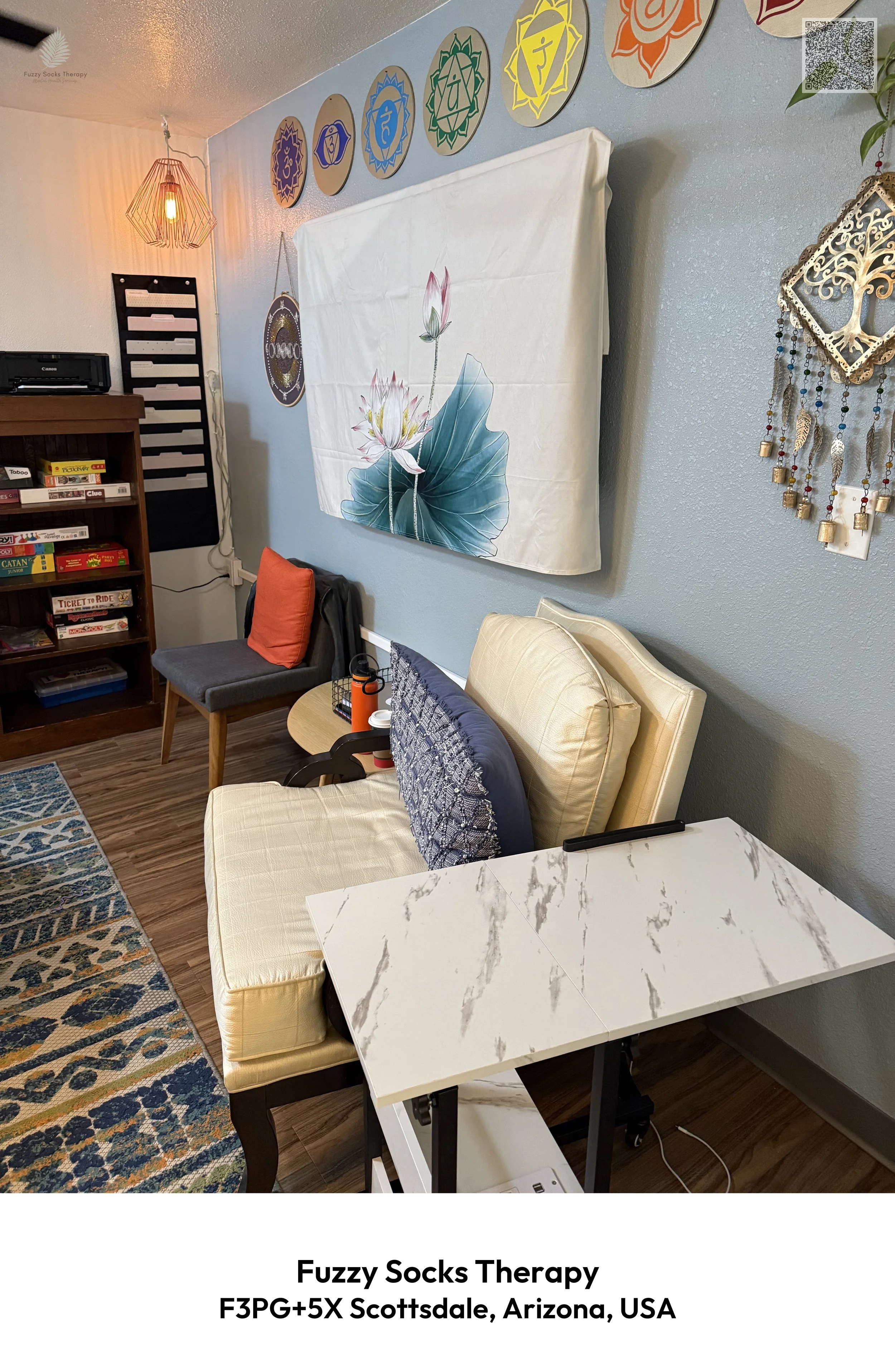
This practice is designed for individuals who feel overwhelmed, "broken," or like they just don't fit into the world around them. Fuzzy Socks Therapy offers a "real" and empathetic space for those tired of fluff, helping clients who are stuck in people-pleasing cycles or paralyzed by past trauma. Whether you are an adult child of a dysfunctional family or a neurodivergent individual facing burnout, therapist Lianna Purjes works with you to build concrete plans, set boundaries, and move from constant worry to confident action.